

Article: Diamond Color: Does It Really Matter? (Hint: Yes, and Here’s Why)
Diamond Color: Does It Really Matter? (Hint: Yes, and Here’s Why)
When shopping for a diamond, you’ll hear a lot about carat weight, clarity, and cut—but color is one of the most important (and often misunderstood) factors. Some say you can drop a few color grades to save money, but at SEV, we believe in only using DEF color diamonds—and trust us, there’s a reason for that.
What Is Diamond Color?
Despite the name, diamond color actually refers to the lack of color—meaning the whiter (or more colorless) a diamond is, the higher its value.
The Gemological Institute of America (GIA) grades diamond color on a D-to-Z scale:
- D-F (Colorless) – The best of the best. No visible color, pure icy brilliance.
- G-J (Near Colorless) – A slight warmth in certain lighting, but still appears white in most settings.
- K-M (Faint Color) – Noticeable yellow tint, especially in larger stones.
- N-Z (Noticeable Color) – Deeper yellow or brown tones, rarely used in fine jewelry.
At SEV, we only work with D, E, and F color diamonds because they guarantee a bright, white, and high-quality look—without any risk of unwanted warmth or tint.
D, E, and F: The Invisible Difference 💎✨
When it comes to D, E, and F color diamonds, the truth is simple—the difference is nearly impossible to see with the naked eye.
All three grades are classified as “colorless”, meaning they are at the top of the scale in terms of purity and whiteness. Here’s a quick breakdown:
- D Color: Absolutely colorless. The rarest and most sought-after, known for its pristine, icy brilliance.
- E Color: Also colorless, with only minute traces of color detectable under high magnification. To the eye? Still flawlessly white.
- F Color: The highest grade of “colorless” with a barely detectable hint of color—again, only visible under professional magnification.
To the naked eye, these three grades are indistinguishable. Whether you’re in bright daylight, soft candlelight, or the glow of a romantic dinner, a D, E, or F color diamond will all appear equally bright and stunning.
Why We Use D, E, and F Diamonds at SEV
At SEV, we believe in offering only the best. By sticking exclusively to DEF color diamonds, we ensure that every stone we offer is pure, bright, and breathtaking from every angle.
Most jewelers will tell you that G or H color diamonds offer better "value"—but in reality, the price difference between F and G color lab diamonds is minimal and the difference in price isn’t worth the trade-off in quality.
Why Lab Diamonds Look Whiter Than You Expect
If you’ve ever looked at a lab-grown diamond and thought, “Wow, this looks whiter than I expected,” you’re not imagining things. It’s not that lab diamonds are inherently whiter—it’s just that your eyes are used to seeing natural diamonds in lower color grades.
Here’s why:
- Most natural diamonds in the market fall in the G-J range (or lower). Why? Because D-F color natural diamonds are rare and expensive, so most retailers push near-colorless (G-J) stones to keep pricing more accessible.
- Lab-grown diamonds, on the other hand, are more commonly available in the D-F range because they can be created with fewer impurities and more precise control over quality.
- Since most people have seen natural diamonds in the G-H range, a D-F lab diamond looks whiter in comparison—even though it’s just as colorless as a top-tier natural diamond.
This is one of the biggest advantages of lab diamonds: You can get a perfectly colorless D, E, or F diamond without the sky-high premium of a natural stone.
Pro Tip: How to Enhance or Minimize Diamond Color with Your Setting
Your choice of metal and prong color can make a huge difference in how your diamond appears:
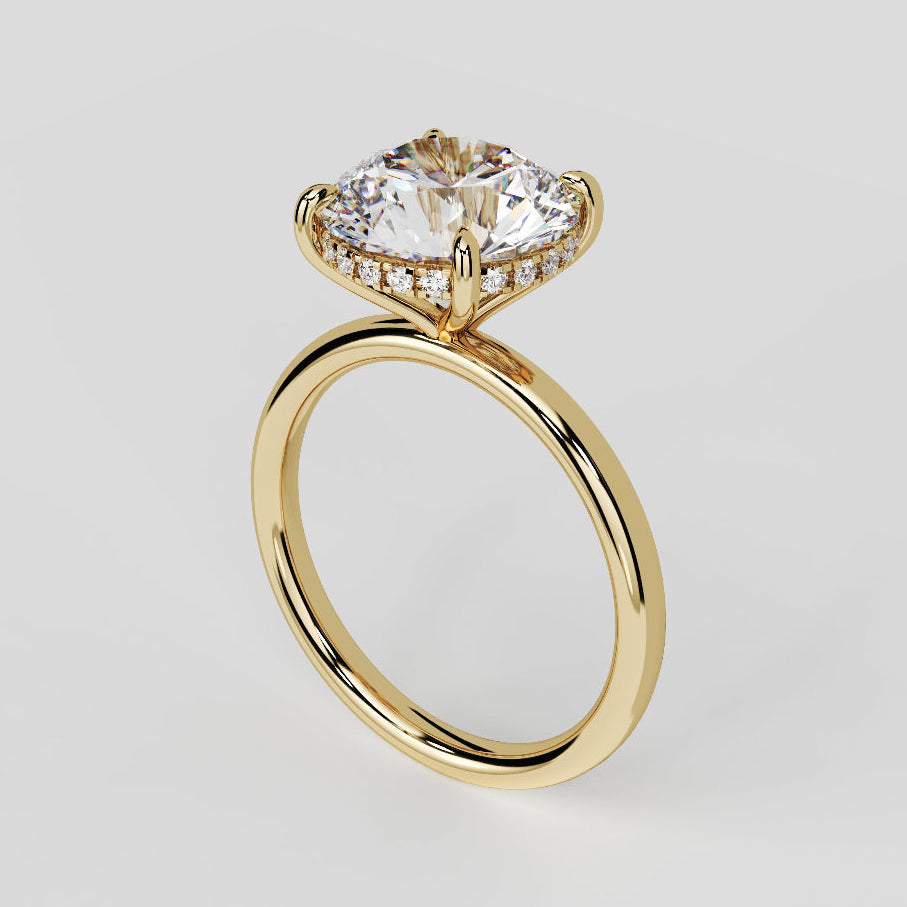
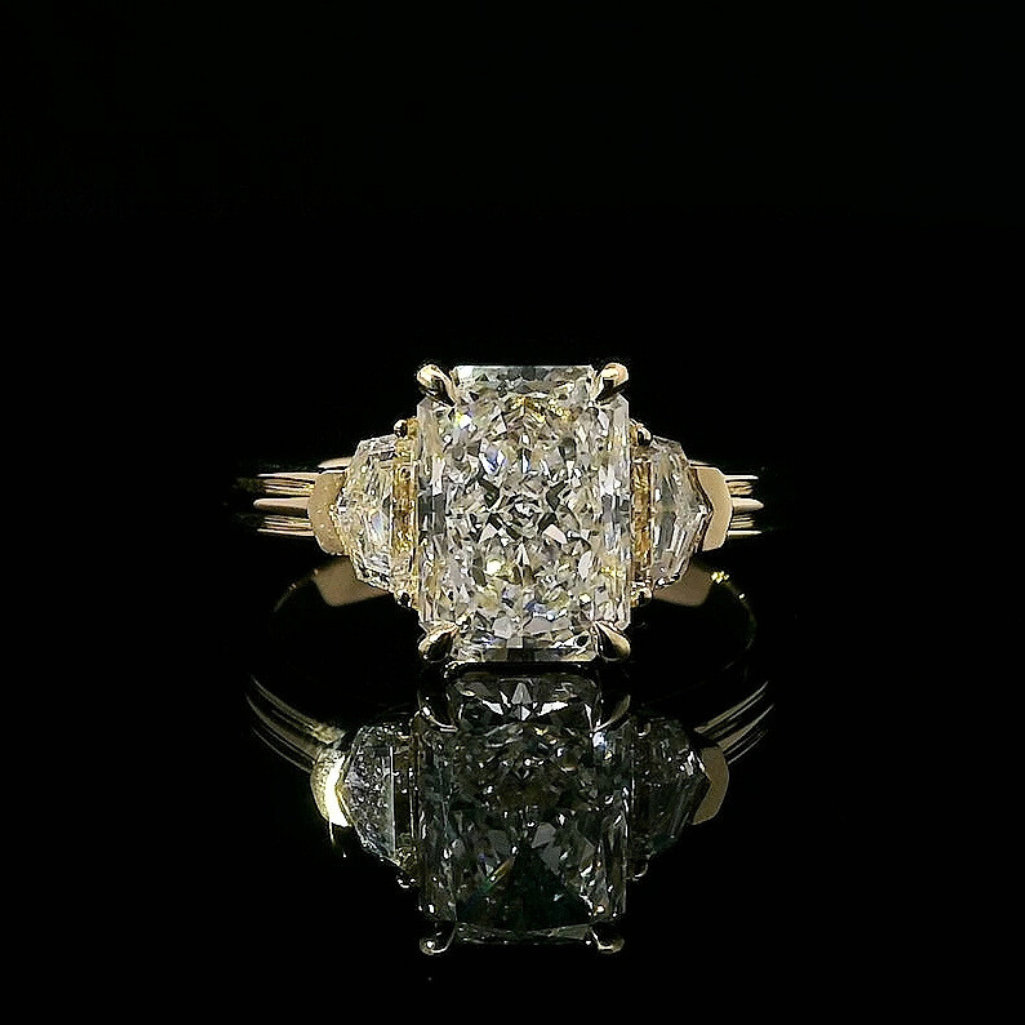
Want a warm, romantic glow? Yellow gold prongs will enhance a natural warmth in your diamond, making even a colorless diamond appear rich and golden.
Prefer an icy, crisp white look? White gold or platinum prongs will keep your diamond looking as bright and colorless as possible, making a D-F color stone appear even whiter.
%20factors.%20Some%20say%20you%20can%20drop%20a%20few%20color%20grade...)